Refund policy for an online store: what to include, and how it holds up in a dispute
How to write a refund policy for an online store: the window, partial refunds, fees, wallet deadlines, where to show it, and its role in a dispute.
On this page
A refund policy for an online store tells buyers when they can get their money back, how much, how, and how long it takes. A good one does two jobs at once: it answers the buyer's question before they ask it, and it is the document you show a card issuer when a buyer disputes a payment instead of asking you for a refund. That second job only works if the policy matches how refunds actually move through your payment provider.
This guide covers what to put in an ecommerce refund policy, how each clause plays out when payments are cross-border, where to show the policy, and how it is used as evidence in a chargeback. It is practical guidance, not legal advice: consumer law in your buyers' countries can give them rights your policy cannot take away, so have the final text checked for the markets you sell to.
What should a refund policy for an online store include?
| Clause | What to say | Why it matters |
|---|---|---|
| Eligibility | Which products or services can be refunded, and which cannot (digital downloads once accessed, personalised goods, used services) | The most common source of disagreement |
| Window | How long after purchase or delivery a buyer can ask | Must fit within your payment methods' refund deadlines (below) |
| Full or partial | When you refund in full, when in part (unused time, a missing item, a return without packaging) | Lets you settle a complaint without returning everything |
| How to ask | An email address or form, and what to include (order number, reason) | A buyer who cannot reach you goes to their bank |
| How the money comes back | To the original payment method, in the original currency | Avoids promising something your provider cannot do |
| Timing | When you process the request, and that the bank or wallet may take longer to show it | Buyers judge you by when the money appears |
| Returns and shipping | Who pays return shipping, the condition goods must be in | For physical goods |
| Cancellations | How to cancel an order or a subscription before it renews | Cancellation disputes need this disclosure |
Refund terms that must match how payments work
Some promises are easy to write and impossible to keep. On KukoPay, refunds work like this — write your terms around it:
- Refunds go back to the original payment method, in the order's currency. You cannot refund an Alipay payment to a card, or an HKD order in USD. See partial refunds explained.
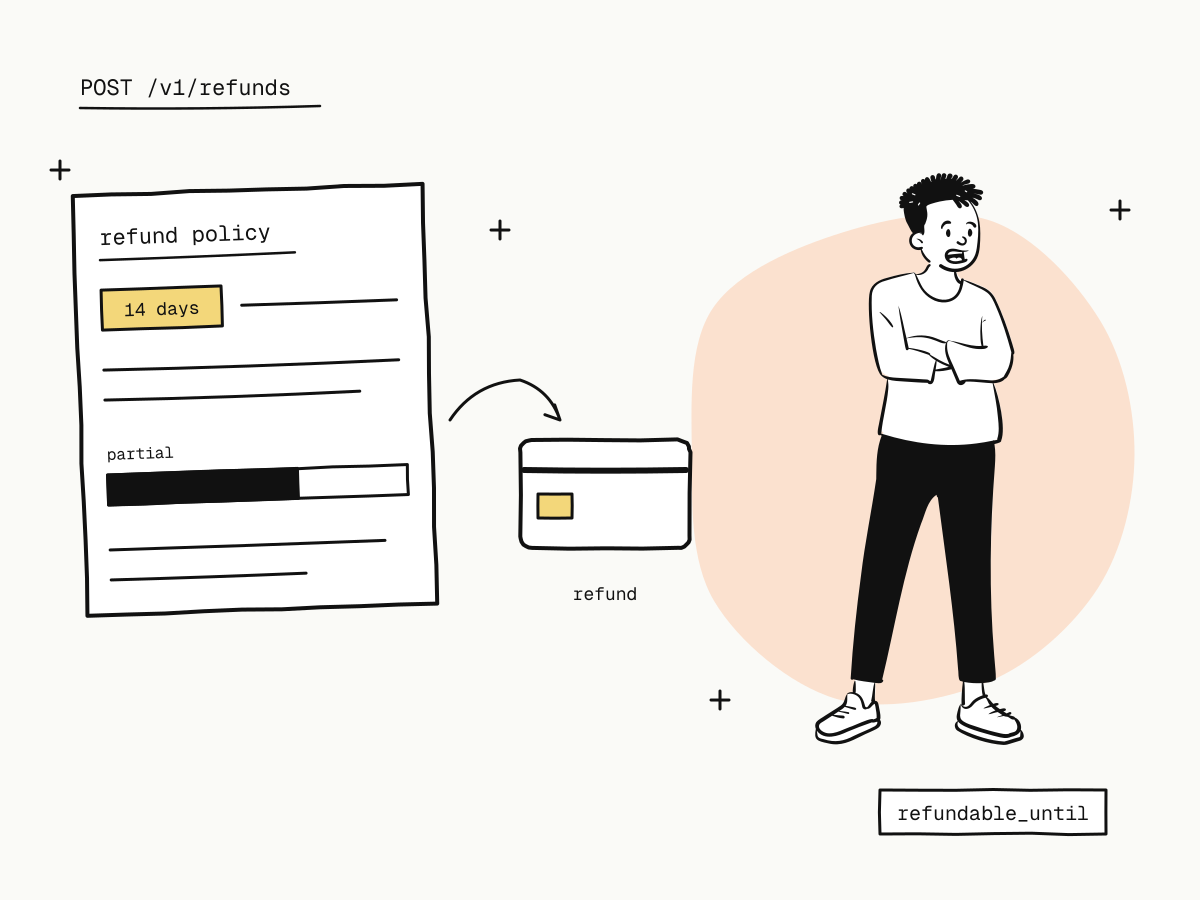
- Partial refunds are fine, several of them, as long as the total does not exceed what was paid. A policy that refunds unused time or one item of an order can be carried out exactly.
- Some methods have a refund deadline. Alipay and WeChat Pay payments, for example, can only be refunded within a window, and the order's
refundable_untilgives the date. Past it, the refund is refused withrefund_window_expiredand you would have to settle with the buyer another way. Keep your policy's window comfortably inside the shortest deadline of the methods you accept, or say that late refunds are handled separately. - Payment fees are not returned with a refund. That is your cost, not the buyer's — do not deduct it from their refund unless your policy and local law allow a restocking or handling fee, and say so plainly if you do.
- A refund may take time to confirm. Some refunds are confirmed by the payment method later; until then the amount is held from your balance. Promise "we process refunds within 2 business days" rather than "the money is back the same day".
- A refund needs funds in your balance. Keep enough in the currency you sell in to cover the refunds your policy promises.
Where to show your refund policy
A refund policy only counts if the buyer could see it before paying.
- A dedicated page, linked from your site's footer and from the product or pricing page.
- At the point of purchase: a line next to the pay button — "30-day refund policy" with a link — or a checkbox for terms that differ from the norm, such as non-refundable digital goods.
- In the receipt. Pass
receipt_emailon the order and every paid order sends a receipt; buyers' replies go to your business contact email, so a refund request can start there. Repeat the policy, or a link to it, in your own order confirmation. See payment receipts. - A clear order subject, so the buyer knows what the charge was for — see friendly fraud and unrecognized charges.
How a refund policy helps you win a chargeback
When a buyer disputes a payment because they "asked for a refund and were refused", the issuer looks at your policy. The evidence that answers that reason is:
refund_policy— the policy document itself;refund_policy_disclosure— how and where the buyer was shown it before paying;refund_refusal_explanation— why this request did not qualify under it.
A policy that was visible at checkout, matches what happened, and was applied as written is strong evidence. A policy buried in a footer, or contradicted by your own emails, is weak. The chargeback guide lists the evidence for other dispute reasons.
Two rules follow from how disputes work: refund before a complaint becomes a dispute, because a refund ends the matter while a chargeback freezes the amount and counts toward your chargeback rate; and do not refund an order that is already disputed — the amount is already held for the buyer, so KukoPay refuses that refund with 409 rather than pay the buyer twice.
A simple refund policy template
Adapt this to your products and have it checked for your markets:
Refunds
- You can ask for a refund within 14 days of purchase by emailing [email protected]
  with your order number.
- Unused [products / subscription time] are refunded in full; partly used ones are refunded
  for the unused part.
- [Digital downloads that have been accessed / personalised items] cannot be refunded,
  unless they are faulty.
- Refunds are made to the original payment method, in the currency you paid in.
- We process approved refunds within 2 business days. Your bank or wallet may take a few
  more days to show them.
- To cancel a subscription, [how], before the renewal date.
Summary
- A refund policy for an online store states eligibility, the window, full and partial refunds, how to ask, how and when money comes back, returns and cancellations;
- write terms your payment provider can carry out: original method and currency, partial refunds within the paid amount, and a window inside wallet refund deadlines;
- show the policy before payment and in the receipt, so it counts as disclosed;
- when a buyer disputes a refused refund, the policy, its disclosure and your refusal explanation are the evidence;
- refund fair requests early, and never refund an order that is already under a chargeback.
Try it in the sandbox
Create a merchant account and request a test key. The sandbox needs no business verification.